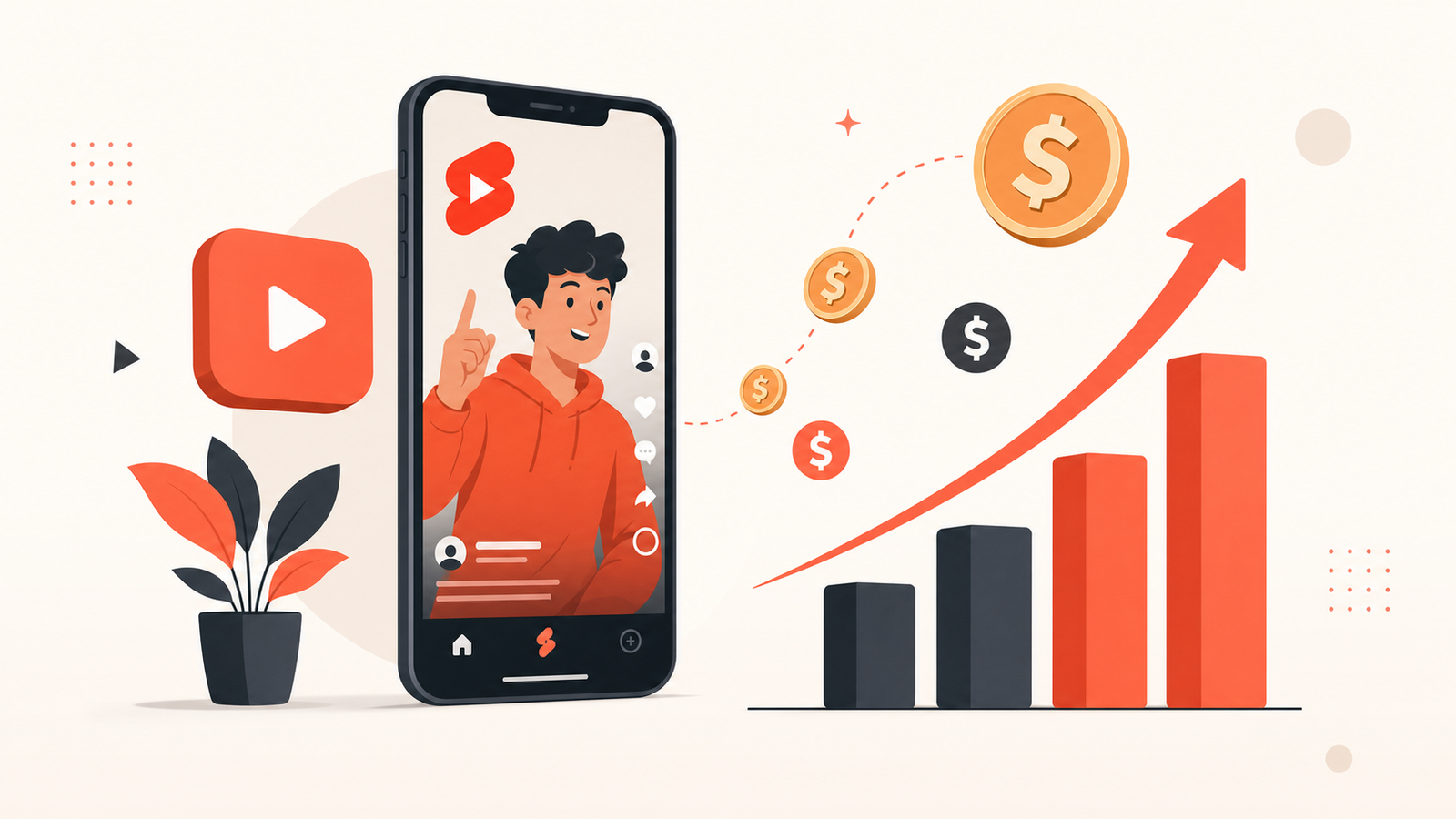
Ad revenue from YouTube Shorts alone will not pay your rent. Say that out loud before you read another word of this guide, because almost every article about Shorts monetization buries that fact under excitement about the Partner Program. The truth is simpler and better: Shorts ad revenue is real, it's worth claiming, and it's the smallest of three income paths available to you right now.
The bigger money is in what your Shorts prove about you. A creator who consistently makes short-form video that holds attention is exactly what brands are paying for right now — and that pays far better, per video, than any ad-share check ever will. This guide covers all three paths: YouTube's own Partner Program payouts, realistic earnings expectations, and the UGC and brand deal path that most creators are leaving on the table.
If you haven't nailed your growth yet, back up and read our guide on how to go viral on YouTube Shorts first — views are the raw material every monetization path here depends on.
How YouTube Shorts monetization actually works
Shorts monetization runs through the same YouTube Partner Program (YPP) that long-form creators use, with revenue-sharing rules adapted for the format. Here's the mechanic in plain terms:
YouTube pools the ad revenue that runs between Shorts in the Shorts feed, then divides a share of that pool among eligible creators based on how many views their Shorts get relative to everyone else's in that pool for that month. This is different from long-form YouTube, where ads run directly on your specific video and you get a more direct cut of that exact ad's revenue. On Shorts, you're earning a slice of a shared pool — which is a big part of why per-view payouts are so much lower than long-form.
Music licensing also eats into the pool. If your Short uses a licensed song from YouTube's audio library, a portion of the ad revenue attributable to that view goes to the rights holder before creators are paid. Original audio and voiceover-driven content keeps a larger share of the pool for creators.
Getting into the YouTube Partner Program for Shorts
You can't earn a cent of ad revenue on Shorts without clearing YPP's eligibility bar first. There are two separate paths in — you only need to qualify for one:
- The Shorts path: 1,000 subscribers and 10 million valid public Shorts views in the trailing 90 days.
- The long-form path: 1,000 subscribers and 4,000 valid public watch hours on long-form content in the trailing 12 months.
You also need to be in a country/region where YPP is available, follow YouTube's monetization policies (no reused content without meaningful added value, no repetitive/spam formats), have no active Community Guidelines strikes, and have 2-Step Verification and an active AdSense account linked.
Practical read: the 10-million-views-in-90-days bar is high for most new creators, but it moves fast once your growth loop is working — it rewards exactly the consistency and virality tactics covered in how to go viral on YouTube Shorts. Don't treat YPP as the finish line, though — treat it as one income stream you unlock along the way.
Realistic Shorts earnings: what to actually expect
Be skeptical of any number that sounds too clean. Shorts RPM (revenue per thousand views) varies constantly by niche, audience geography, time of year, and how much of the ad pool is being split that month. But directionally, here's what's true and worth planning around:
- Shorts RPM is low compared to long-form video — typically a small fraction of what a comparable long-form video earns per 1,000 views, because you're sharing a pool rather than getting a direct cut.
- Views need to be large to produce meaningful income. A single viral Short with millions of views might generate a modest payout, not a life-changing one. Ad revenue on Shorts rewards sustained volume over time, not one lucky hit.
- Niche matters more than most creators expect. Finance, tech, and business content tends to carry higher ad rates than general entertainment or comedy, because advertisers pay more to reach those audiences.
- Geography of your viewers matters. Views from higher ad-spend countries (the US, UK, Canada, Australia) are worth more than views from regions with lower advertiser demand.
The honest takeaway: think of Shorts ad revenue as a baseline — a small, steady trickle that scales with volume, not a strategy you can build a full income around by itself. That's exactly why the next two sections matter more for most creators.
Beyond ad revenue: UGC and brand deals pay far more

Here's the shift that's changed the game for short-form creators over the last few years: brands don't just want you to promote their product on your own channel anymore — they want you to make content for them, the same skill you're already using on your own Shorts. This is UGC (user-generated content) work, and it's a completely different, much bigger income path than the Partner Program.
Why UGC and brand deals outearn Shorts ad revenue
A single UGC video — a piece of content made for a brand to use in their ads or on their own social accounts — commonly pays more than what most creators would earn from tens of thousands of organic Shorts views combined. You're not being paid for your reach here; you're being paid for your skill: hooks, editing, pacing, and the same retention instincts that make your own Shorts perform. Brands need that skill and don't want to build an in-house content team to get it.
There are two overlapping flavors of this work:
- Flat-fee UGC — you're paid a set amount per video, regardless of how it performs, because the brand is using it in their own paid ads or on their own channels. Rates commonly range from roughly $10 for entry-level, high-volume gigs up to several hundred dollars for niche, high-production, or usage-rights-heavy briefs.
- Creator/affiliate brand deals — the brand pays you to post from your own account, sometimes with a flat fee, sometimes as a per-view or per-post rate on top of an affiliate commission. This route lets your existing audience and posting cadence become the asset you're monetizing.
What brands actually look for before they pay you
- Proof you can hook and retain viewers — your existing Shorts are your resume. Strong retention on your own content is the single best predictor a brand looks for.
- A clean way to review your work — brands skim fast. If your best clips are scattered across a channel with no organization, most will move on rather than dig.
- Consistency, not one viral fluke — brands want to know you can deliver on a schedule, not that you got lucky once.
- Niche fit — a skincare brand wants to see you talk to camera about products; a fintech app wants to see you explain something clearly on screen. Match your portfolio to the type of brand you want to work with.
How to actually land UGC gigs and brand deals
This is the part most creators get stuck on — not because the work is hard, but because finding it and pitching for it eats hours they'd rather spend filming. Three concrete paths:
1. Apply to gigs directly instead of waiting to be found
UGC gigs are posted constantly across brand platforms, agencies, and creator marketplaces — the problem is they're scattered everywhere and most are gone within a day. ReelPilot's Canvas Board solves this by pulling in 100-300+ active UGC gigs a day into one place. Curated programs on Canvas commonly pay a flat $10 per video plus performance bonuses, and Canvas UGC listings let you post directly on a brand's own account and earn per view, typically in the $2-$8 CPM range — meaning your existing skill at getting views translates straight into a rate card instead of ad-share pennies.
2. Take structured, no-pitch assignments
Not every creator wants to write outreach or negotiate. ReelPilot's UGC Tasks are fixed-pay assignments straight from brands with clear briefs and no pitching required — you see the deliverable and the pay upfront, you film it, you get paid. It's the fastest way to convert your editing and hook skills into income without adding a sales job on top of your creative one.
3. Let outreach happen automatically while you keep creating
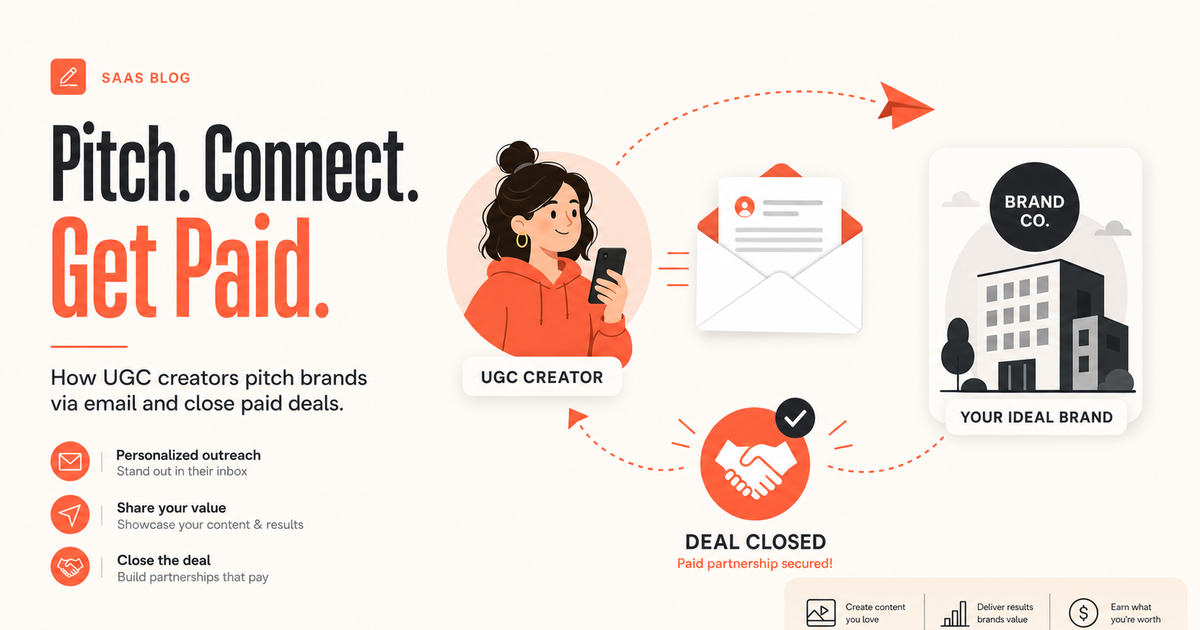
The highest-paying deals usually aren't sitting on a public job board — they come from cold outreach to brands that are a genuine fit for your content. Most creators either skip this entirely or spend hours a week on it manually. ReelPilot's AI Brand Pitching finds brands similar to ones you've already worked with or that fit your niche, writes personalized outreach sent from your own email, and generates pitches you can send in one click — you approve every pitch before it goes out, so it's still your voice, just without the hours of manual searching and follow-up.
Underneath all three of these is the same starting point: a portfolio brands can actually look at. ReelPilot's Portfolio Builder turns your best Shorts into a shareable page in about two minutes — no decks, no design work, just a link you can drop into any pitch or application. If you haven't built one yet, that's the first move, and it's free for up to 6 videos.
Pricing your UGC and brand work as a creator
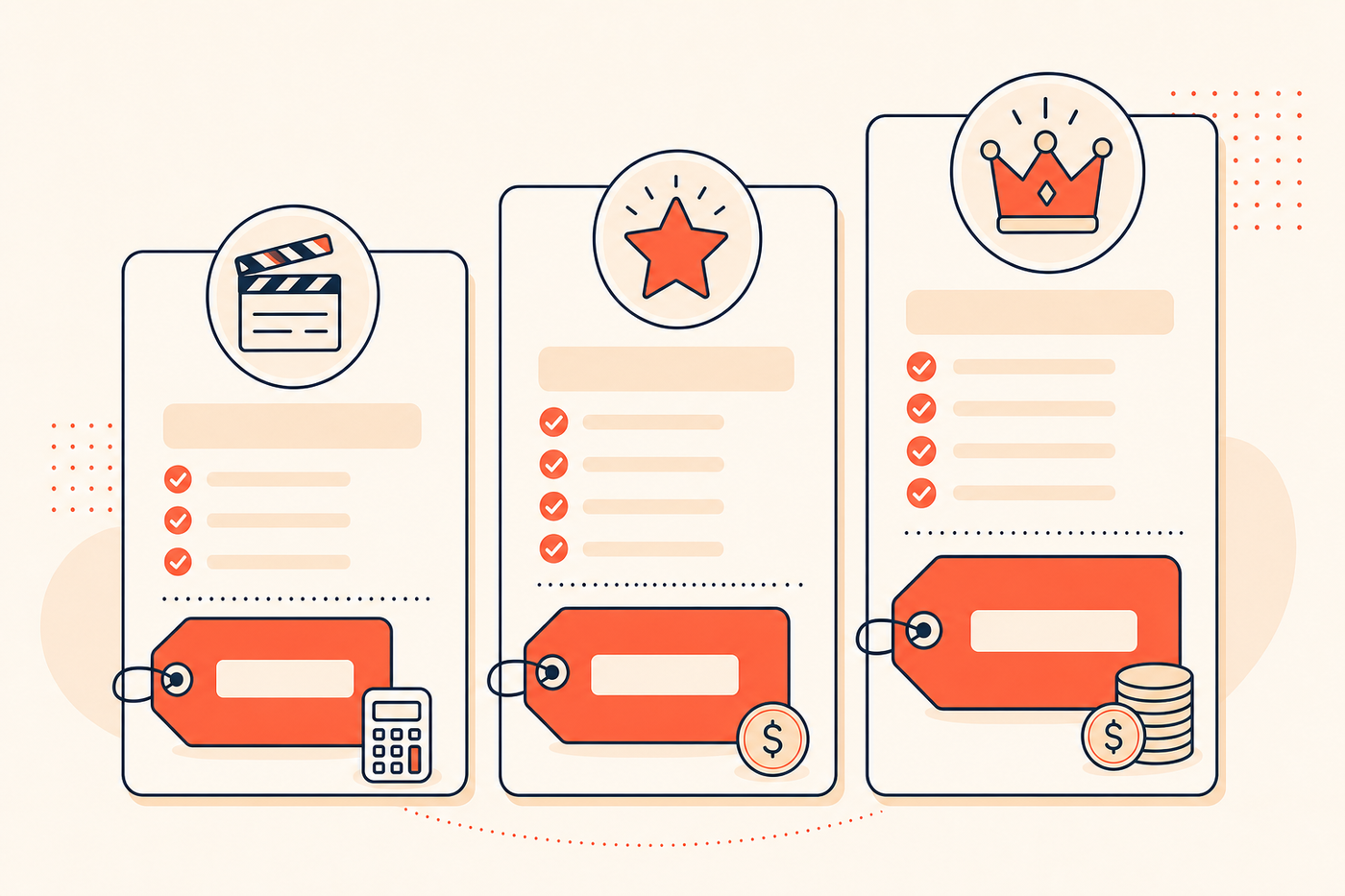
One reason creators leave money on the table is they don't know what to charge. A few grounding principles:
Price for the deliverable, not your follower count
Flat-fee UGC work is usually priced by production complexity, usage rights, and turnaround time, not your audience size, since the brand is running it as their own ad. A creator with 500 followers and strong editing skill can charge the same as a creator with 50,000 followers for the same style of deliverable.
Understand what usage rights are worth
A video the brand can only post organically on their own page is worth less than a video they can run as a paid ad across multiple platforms for months. Always ask how and where the content will be used before agreeing to a rate, and price broader usage higher.
Start with flat-fee gigs, graduate to negotiated deals
Entry-level UGC gigs (in the roughly $10-$50 per video range) are a fast way to build a portfolio and case studies. Once you have a handful of finished, well-reviewed pieces, you're in a position to negotiate higher flat fees or per-view/per-post rates directly with brands instead of only taking listed rates.
Don't undercut long-term rates for a fast yes
It's tempting to accept a low offer just to land your first deal. One or two lower-paid gigs to build proof is reasonable; making it a habit trains brands (and yourself) to expect bargain pricing permanently.
Other income paths worth knowing about
Ad revenue and UGC/brand deals are the two paths every Shorts creator should prioritize, but a few others round out a full monetization stack once you have an audience:
- Channel memberships and Super Thanks. Available once you're in YPP, these let engaged viewers pay directly to support your channel. Income here scales with loyalty, not raw view count, so it tends to matter more once you have a returning audience rather than purely viral reach.
- Affiliate links. Recommending products relevant to your niche and earning a commission on sales works well for Shorts in categories like tech, beauty, fitness, and finance. This pairs naturally with UGC skills since the format is similar: a quick, honest demonstration of a product.
- Merch and digital products. Once you have a consistent audience, some creators sell templates, presets, courses, or physical merch. This takes longer to build but doesn't depend on any platform's ad-revenue rules at all.
- Licensing your best clips. Media outlets and brands sometimes pay a flat fee to license a viral clip for reuse. It's not a primary strategy, but it's worth knowing this exists if a video takes off unexpectedly.
None of these replace the two main paths above, but stacking one or two of them on top of ad revenue and UGC work rounds out a more resilient income mix.
Building a Shorts strategy that maximizes every income path at once
The best part about stacking these three paths — ad revenue, UGC gigs, and brand deals — is that they all run on the same underlying skill and the same content. You don't need a separate strategy for each one.
- Post consistently and optimize for retention. This grows your organic views (feeding ad revenue) and builds the proof brands want to see (feeding UGC and brand deal pitches). See our guide to going viral on YouTube Shorts for the tactical breakdown.
- Track which niches and formats perform best for you. This tells you which YPP-eligible content to double down on and which brand categories to pitch — skincare, fitness, tech, food, and finance UGC are all in high demand right now.
- Get your subscriber and watch-hour numbers toward YPP eligibility so ad revenue starts flowing in the background while you build the bigger income streams.
- Build a portfolio the moment you have 5-10 solid Shorts. Don't wait for "enough" content — brands pay for quality and fit, not volume of followers.
- Apply to a few gigs on Canvas Board weekly to get comfortable with the UGC format and start collecting flat-fee income immediately.
- Turn on AI Brand Pitching once you have a portfolio and a niche so outreach keeps working even on weeks you're heads-down filming.
If you're deciding where to focus your energy, remember the order of magnitude: ad revenue rewards volume with small payouts, UGC pays a reliable flat rate per video, and brand deals can pay the most per piece of content once you have proof of your skill. Most sustainable creator income comes from doing all three at once, not picking one. And if you also post on other platforms, the same UGC and brand-deal logic applies — check out how creators pitch brands and how to make a reel go viral for the cross-platform version of this playbook.
Common mistakes that slow down your Shorts income
- Waiting for YPP approval before pursuing brand deals. These are independent tracks. You can start pitching and applying to UGC gigs the day you have a handful of strong Shorts, regardless of your subscriber count or ad revenue status.
- Treating every brand deal as a favor to be grateful for. Brands need creators who can make content that performs. Price your work based on the skill and time involved, not just what you'd be happy to receive.
- Ignoring usage rights. Flat-fee UGC deals often include the brand's right to run your video as a paid ad. Read the brief so you know exactly how and where your face and voice might appear before you accept.
- Only applying to gigs in your immediate niche. Many UGC briefs are broader than they look -- a general "talk to camera" skill transfers across skincare, apps, food, and finance content. Don't filter yourself out of gigs you could actually do well.
- Letting outreach fall to the bottom of the to-do list. Pitching brands is the task most creators skip because it feels like sales, not creation -- which is exactly why automating it, rather than hoping to get to it, closes more deals over time.
What a realistic first-year income mix can look like
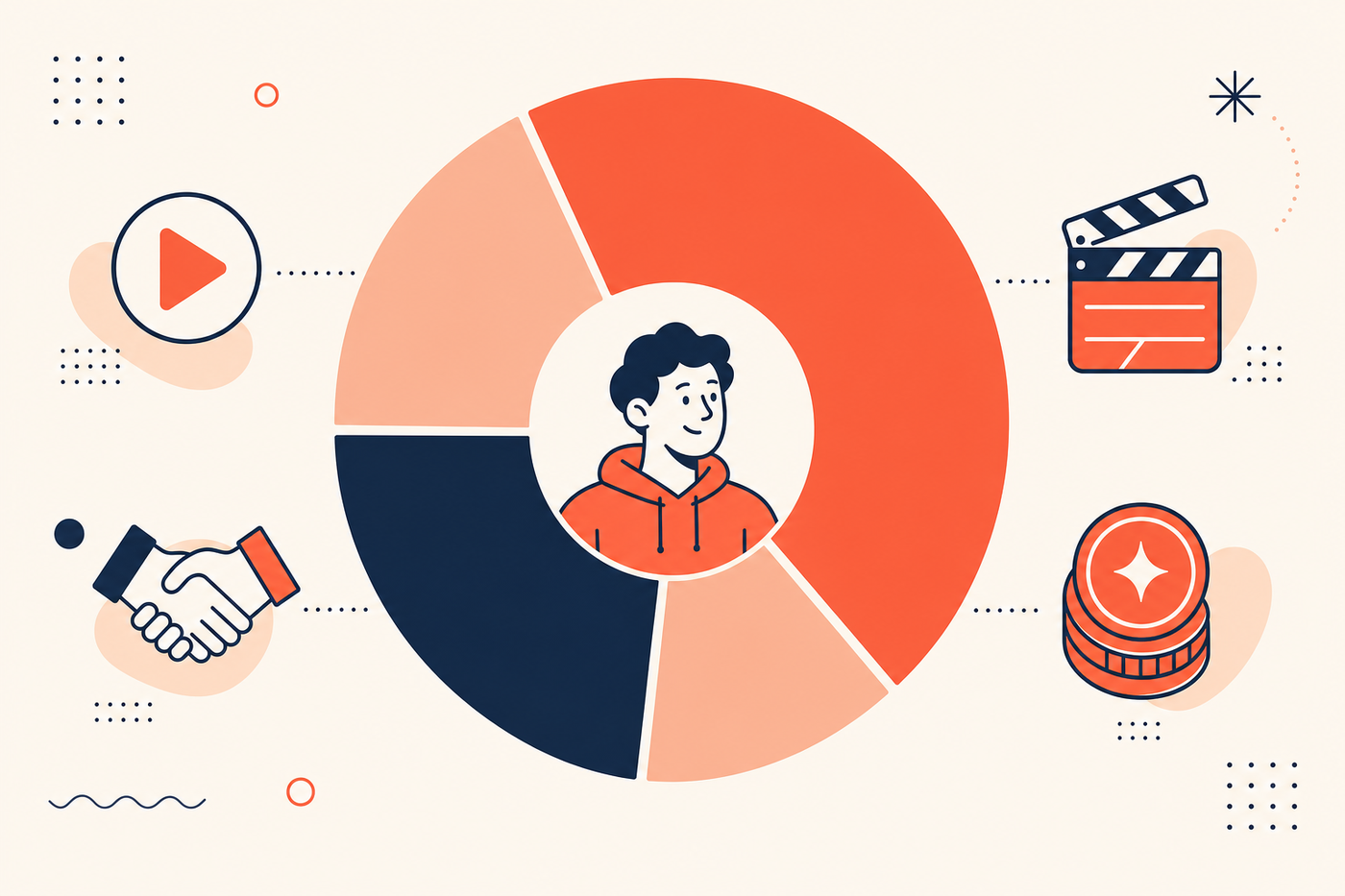
Every creator's numbers differ, but the shape of a healthy first-year mix tends to look similar: a small, steady ad revenue trickle once YPP eligibility hits, a growing base of flat-fee UGC gigs as your portfolio fills out, and a small number of higher-paying brand deals once your niche and proof are clear. None of these show up instantly, and none of them require waiting on the other two.
The mistake to avoid is sequencing these paths instead of running them together. Waiting for YPP approval before you touch UGC gigs, or waiting for a big following before you build a portfolio, just delays income for no real benefit. Start UGC applications and portfolio-building on day one alongside your growth strategy, not after you feel 'ready.'
Turn your Shorts skill into paid work
You already know how to make a video that holds attention — that's the hard part, and you've done it. Start with a free ReelPilot portfolio, then explore Canvas Board for paid gigs and UGC Tasks for no-pitch assignments. When you're ready to scale outreach, AI Brand Pitching keeps deals coming in while you focus on filming. No followers needed to start — just videos worth showing.
Frequently asked questions
How many subscribers do I need to monetize YouTube Shorts?
You need 1,000 subscribers plus either 10 million valid public Shorts views in the last 90 days, or 4,000 long-form watch hours in the last 12 months, to qualify for the YouTube Partner Program. You only need to hit one of the two view/watch-hour thresholds, not both.
How much money can you actually make from YouTube Shorts ad revenue?
It varies a lot by niche, audience location, and total view volume, but Shorts RPM is generally low compared to long-form YouTube because revenue is split from a shared ad pool rather than tied directly to ads on your specific video. Treat it as a supplementary income stream that scales with consistent volume, not a primary income source on its own.
Can I make more money from brand deals than from the YouTube Partner Program?
For most creators, yes — often by a wide margin. A single UGC or brand deal video commonly pays more than the ad revenue generated by a large volume of organic Shorts views, because brands are paying for your content-making skill directly rather than sharing ad revenue from a pool.
What is UGC content and how is it different from a normal brand deal?
UGC (user-generated content) usually means you create a video for a brand to use in their own ads or social channels — you're paid a flat fee and the brand owns the usage rights. A traditional brand deal or sponsorship usually means you post the content yourself, to your own audience, often for a fee plus your existing reach.
Do I need a large following to get paid UGC gigs?
No. Most UGC work is paid based on the quality and fit of your content, not your follower count — brands often use these videos as ads run to their own audience, not to leverage yours. This makes UGC one of the most accessible paid paths for creators without a big following yet.
How do I find legitimate brand deals without getting scammed?
Stick to established platforms and marketplaces rather than DMs from unknown accounts, and be wary of any "deal" that asks you to pay upfront for products, samples, or access. Tools like Canvas Board aggregate vetted gigs from real brand programs, which reduces the guesswork and risk of chasing sketchy outreach.
Should I focus on ad revenue or brand deals first?
Do both in parallel. Keep posting consistently to build toward YPP eligibility and steady ad revenue, but start building your portfolio and applying to UGC gigs as soon as you have a handful of strong Shorts — you don't need YPP approval to start earning from brand and UGC work.